Butter, lard or shortening: which fat for pie pastry
Butter gives the best flavour and a crisp, flaky texture but is hardest to handle because it melts at a low temperature. Lard makes the most tender, shortest crust and handles easily. Shortening is the most forgiving of all but tastes of nothing. Many bakers split the difference with half butter for flavour, half lard for texture.
By the chickenpie.net test kitchen · Published 17 July 2026
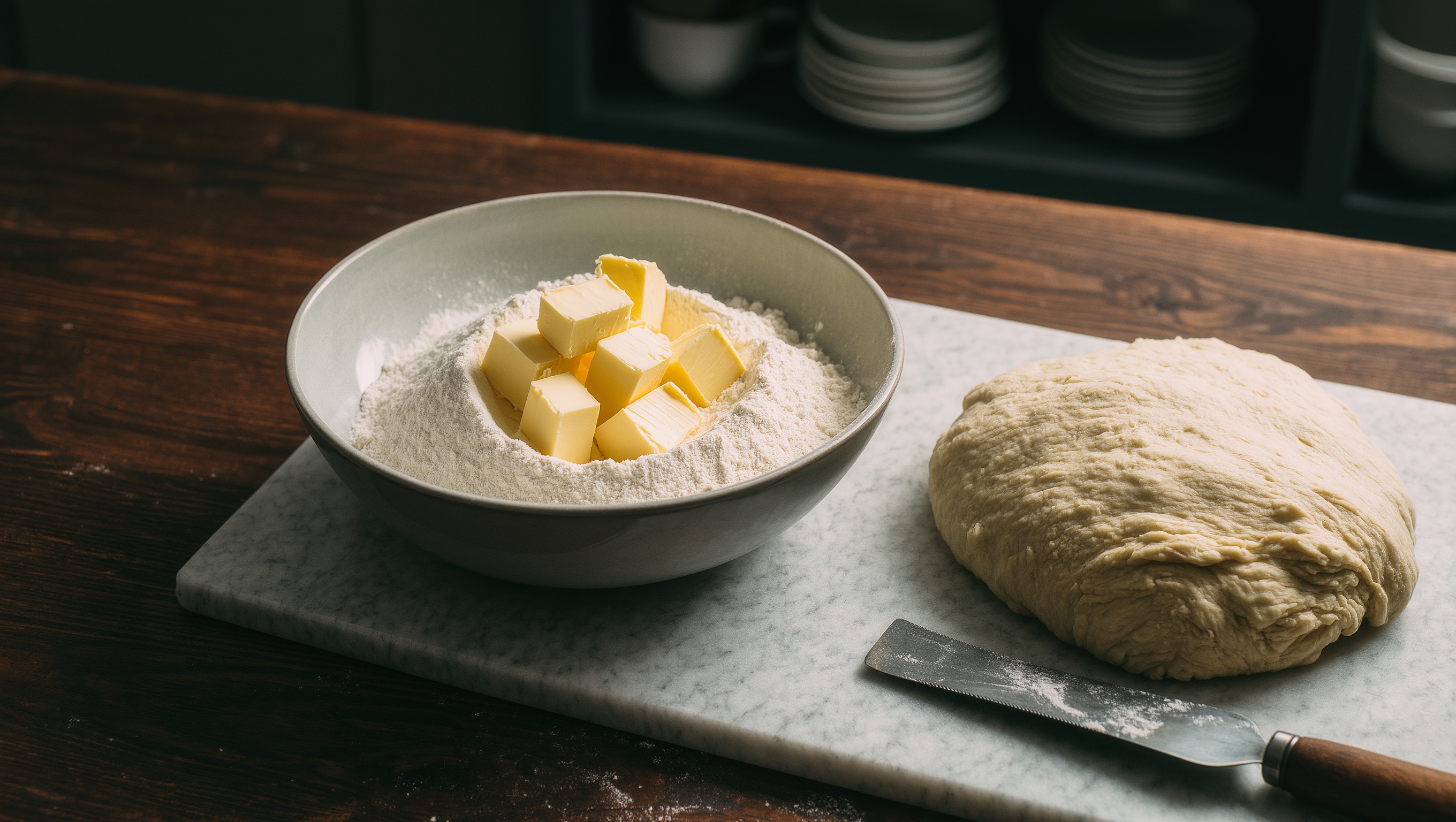
What the fat actually does
Fat in pastry coats flour particles and blocks gluten from forming long, chewy strands. The more completely a fat coats the flour, the shorter and more tender the result. But tenderness trades off against structure and flakiness: pockets of solid fat that melt in the oven leave behind the gaps we read as flaky layers.
Every fat sits somewhere different on that spectrum, and the differences come down to melting point, water content, and flavour. Butter is around 15 to 18 percent water, which creates steam and lift but also makes doughs stickier. Lard and shortening are essentially 100 percent fat.
The three fats compared
There is no single right answer, only the right fat for the pie in front of you.
| Fat | Flavour | Texture | Handling | Best for |
|---|---|---|---|---|
| Butter | Rich, dairy, browns well | Crisp and flaky | Difficult: melts around 32C (90F), needs everything cold | Double-crust pies and lids where flavour leads |
| Lard | Mild, faintly savoury | Very tender, short, fine crumb | Easy: melts around 36C (97F), tolerates warm kitchens | Hot water crust, raised pies, savoury bases |
| Shortening | Neutral, effectively none | Tender but can feel waxy | Easiest: melts around 47C (117F), almost impossible to overheat | Beginners, hand pies made in bulk, very warm kitchens |
The case for blending
A 50:50 blend of butter and lard is the old British compromise for savoury pies, and it remains hard to beat: butter carries the flavour, lard keeps the crumb tender and the dough calm under your hands. Keep the total fat at half the weight of the flour and the ratio behaves exactly like an all-butter shortcrust.
Shortening earns its place when reliability matters more than flavour, such as batch-making dozens of hand pies, or when the pastry is a vehicle for a heavily seasoned filling. If you use it, compensate with a well-salted dough and a generous egg wash, because it contributes no browning of its own.