How to crimp pie edges three ways
The three standard crimps are the fork press, the two-finger flute, and the rope twist, in ascending order of effort and polish. All three do the same job: they weld the lid to the base so the seam cannot open in the oven. Press firmly whichever you choose, because a decorative crimp that does not seal is just decoration.
By the chickenpie.net test kitchen · Published 29 July 2026
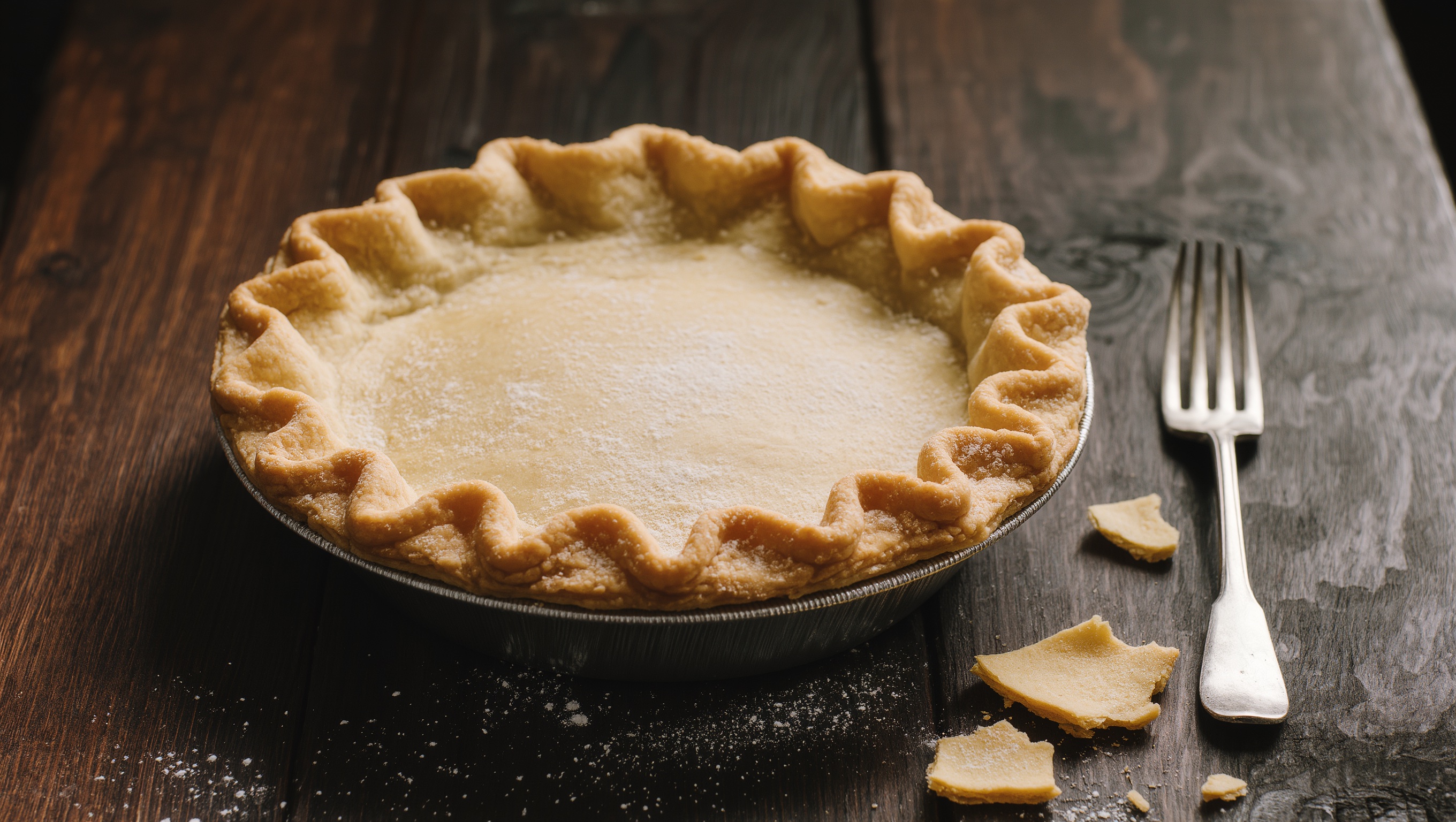
Function first
A crimp is a pressure weld. The filling boils during baking, and the resulting steam pushes hardest at the seam between lid and base. Whichever style you use, the pastry layers must be pressed together firmly enough to fuse, ideally with a little water or egg wash brushed between them first.
Trim both layers to about 1cm of overhang before crimping, and fold them under together so the seam sits on the rim of the dish. That folded edge is what you crimp into.
The fork press
The quickest and most reliable crimp, and the right choice for hand pies and turnovers where the seam is long and the pastry is sturdy. Single-serve bakery pies in Southeast Asia rely on the same sealed edge, base and lid pressed together all round; an anatomy of a Singapore chicken pie from crust to finish shows how that edge holds a fully enclosed pie together.
- Brush the base edge with water or egg wash and lay the lid on top.
- Press the layers together lightly with your fingers all the way round.
- Dip a fork in flour and press the back of the tines firmly into the edge, flattening the seam.
- Repeat around the pie, overlapping each press slightly so no gap survives.
- Tidy any ragged pastry beyond the fork marks with a knife.
The two-finger flute
The classic scalloped edge for a dish pie. Push a knuckle or fingertip of one hand into the gap between the thumb and forefinger of the other, working around the rim so each flute overlaps the last. Keep the pushes firm and deep, because shallow flutes puff out and vanish in the oven. It takes a minute longer than the fork and looks considerably smarter.
For a rope twist, pinch the edge between thumb and the side of your forefinger, rolling your wrist as you pinch so each section folds diagonally over the last. Worked around the pie it reads as a twisted cord. It is the strongest of the three, since every pinch doubles the pastry over itself, and it suits deep double-crust pies where the seam takes real pressure. Whichever crimp you use, chill the pie for 15 minutes afterwards so the shape sets before baking.