How to make rough puff pastry
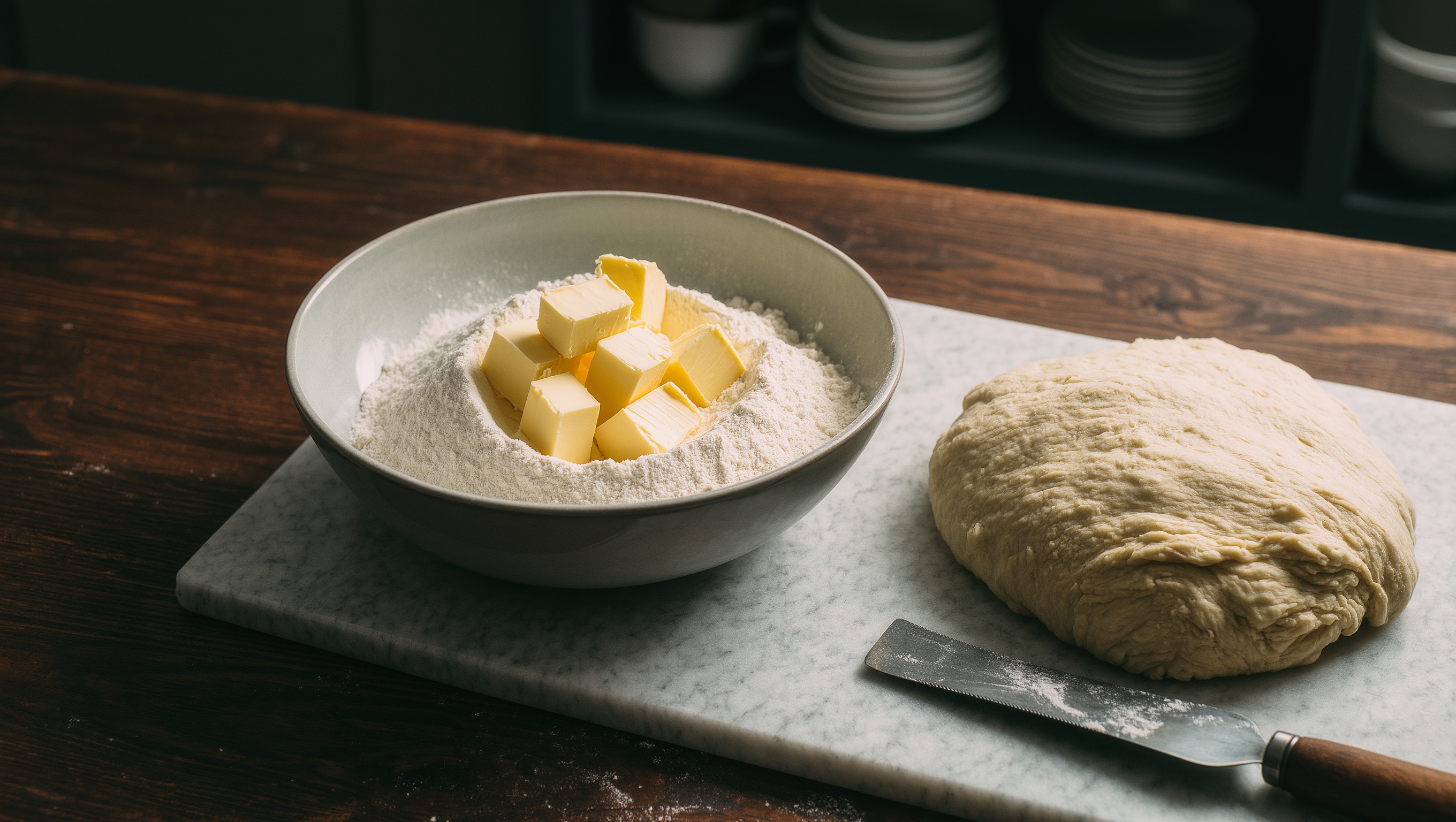
Toss cold butter cubes through flour without rubbing them in, bind with ice-cold water, then roll and fold the shaggy dough four times, resting it in the fridge between folds. A ratio of roughly 4:3 flour to butter, for example 200g flour to 150g butter, gives dramatic flaky layers in under an hour of mostly hands-off time.
By the chickenpie.net test kitchen · Published 8 July 2026
Why rough puff earns its place
True puff pastry laminates a single slab of butter through dozens of folded layers and takes the better part of a day. Rough puff cheats by starting with visible lumps of butter in the dough, then using the same roll-and-fold action to stretch those lumps into streaks. The result is 80 percent of the lift for 20 percent of the effort, and for a chicken pie lid it is arguably the better pastry: sturdier, less fragile, and gloriously flaky.
The working ratio is around 4 parts flour to 3 parts butter by weight. For one generous pie lid, use 200g plain flour, 150g cold butter, a good pinch of salt, and roughly 100ml of ice-cold water.
Step by step
Everything hinges on the butter staying cold and distinct. If it starts to smear, stop and chill the dough before carrying on.
- Cut 150g cold butter into rough 2cm cubes and toss them through 200g plain flour and a pinch of salt. Do not rub them in.
- Add about 100ml ice-cold water and stir with a knife until a shaggy, lumpy dough forms. It will look wrong. That is correct.
- Shape it into a rough rectangle on a floured surface and roll it away from you into a strip about three times as long as it is wide.
- Fold the far third towards you, then the near third over that, like folding a letter.
- Turn the dough a quarter turn, roll into a strip again, and repeat the letter fold.
- Wrap and rest in the fridge for 30 minutes.
- Give the dough two more roll-and-fold turns, by which point it should look smooth with faint marbled streaks of butter.
- Rest for a final 30 minutes before rolling out to use.
Judging when it is ready
After four folds the dough should be cohesive, cool to the touch, and streaked like sandstone when cut. If large raw lumps of butter remain, one extra fold fixes it. If the streaks have vanished entirely, the layers have blended and the lift will be gentler, still good, just less dramatic.
Bake anything topped with rough puff at 200C (400F) so the water in the butter turns to steam quickly and forces the layers apart. A cooler oven lets the butter leak out before the structure sets. Kitchens in hot climates have to work faster still; notes on laminating puff pastry in Singapore heat cover chilling between every turn when the room sits above 30C (86F).