How to make hot water crust
Boil 200ml water with 150g fat, usually lard, pour it over 450g plain flour with a teaspoon of salt, and work the hot dough together while it is still warm and pliable. Hot water crust is shaped warm, sets firm as it cools, and is the only pastry strong enough for a freestanding raised pie.
By the chickenpie.net test kitchen · Published 8 July 2026
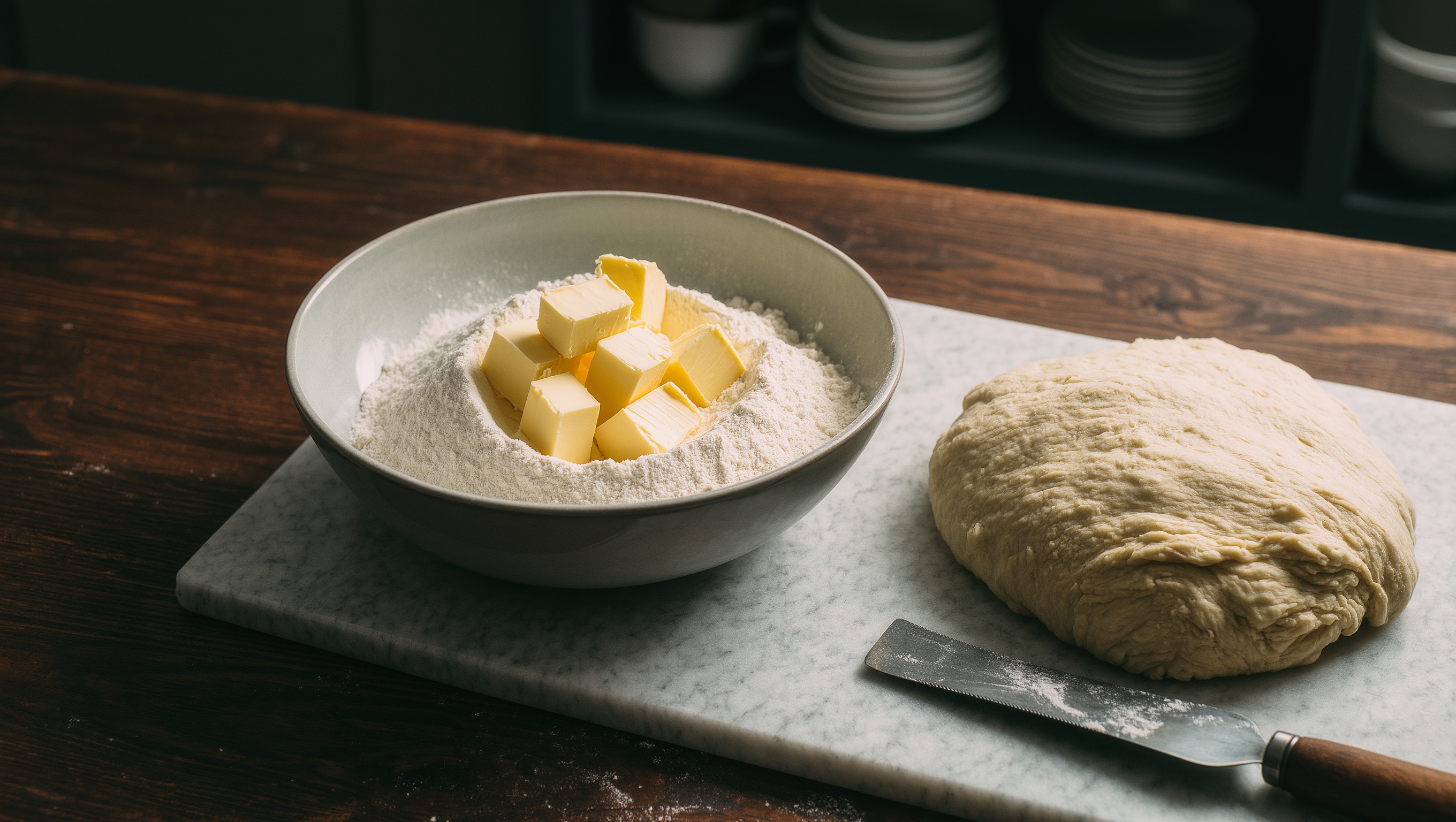
A pastry that breaks the rules
Everything you know about keeping pastry cold gets thrown out here. Hot water crust deliberately melts the fat into the flour with boiling liquid, creating a dense, waxy dough that behaves more like modelling clay than pastry. That workability is the point: this is the crust of the raised pie, the descendant of the medieval coffyn, and it will stand upright without a tin if you ask it to.
The classic proportions are 450g plain flour, 200ml water, 150g fat, and a teaspoon of fine salt. Lard is traditional and gives the crispest finish, though a half-and-half mix of lard and butter adds flavour without sacrificing much strength.
Step by step
Timing matters more than technique. The dough is at its most cooperative in the ten minutes after mixing, so have your pie dish or mould ready before you start.
- Weigh 450g plain flour into a large bowl with 1 teaspoon of fine salt and make a well in the centre.
- Put 200ml water and 150g lard in a small pan and bring to a rolling boil so the fat is fully melted.
- Pour the boiling liquid into the well and stir hard with a wooden spoon until a rough dough forms.
- As soon as it is cool enough to touch, tip it out and knead briefly until smooth, about 1 minute.
- Cut off a third for the lid, wrap it, and keep it somewhere warm so it stays pliable.
- Working while the dough is warm, press or roll the larger piece to line your tin or mould, pushing it up the sides so there are no thin spots.
- Fill, roll out the reserved lid, seal the edges firmly, and cut a steam hole before baking.
Warm to work, cool to hold
The dough stiffens as the fat sets, so a pie shaped warm will hold its walls perfectly once it cools slightly. If the dough cracks while you shape it, it has cooled too far: 10 seconds in a warm oven or a brief knead brings it back.
Bake at 200C (400F) for the first 30 minutes to set and colour the crust, then reduce to 180C (350F) until the filling is done. Do not expect flakiness. Hot water crust is about strength, snap, and the deep savoury crunch that suits a chicken pie eaten cold as much as hot.