How to transport a pie without wrecking it
Cool the pie completely, keep it in its baking dish, and carry it flat on a non-slip surface such as a folded towel in the boot or footwell, then reheat it whole at the destination at 160C (325F) for 20 to 30 minutes. A fully cooled pie is structurally solid; a warm pie is a liquid in a pastry envelope.
By the chickenpie.net test kitchen · Published 2 September 2026
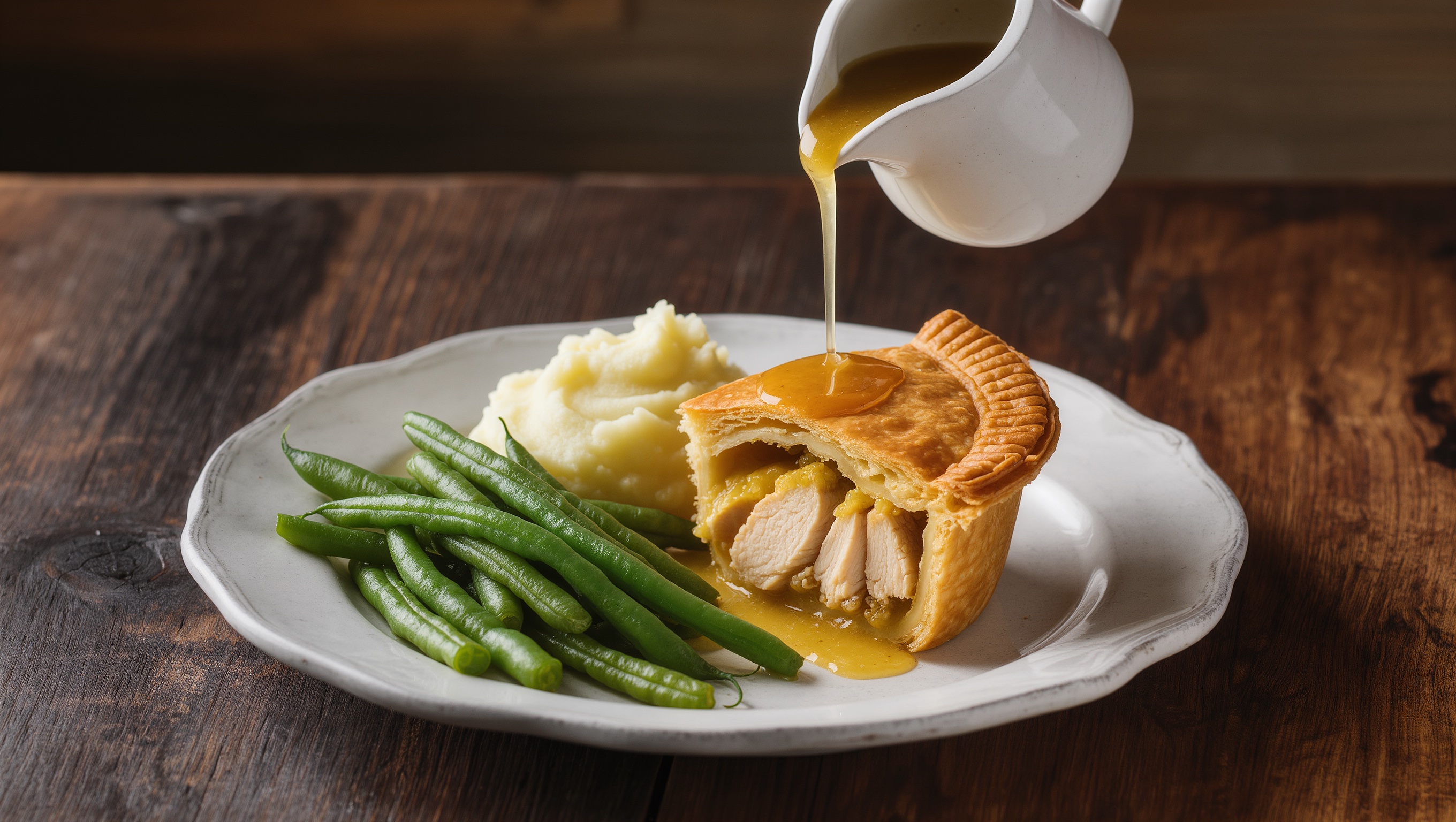
Cold pies travel, hot pies do not
The single biggest decision is temperature. A pie fresh from the oven has a molten filling and pastry at its most fragile, and every corner taken in the car shifts the contents against the walls. Cooled completely, the filling sets into a sliceable solid, the pastry hardens, and the same pie becomes robust enough to survive a lap of the ring road.
So build your schedule backwards: bake early, cool for at least 2 hours at room temperature or overnight in the fridge, travel cold, and reheat at the other end. The reheat also re-crisps the pastry, which means the pie arrives at the table better than it would have survived the journey hot.
Step by step
This assumes a dish pie travelling by car. Hand pies barely need the checklist; a raised pie needs all of it.
- Bake the pie the day before or early on the day, and cool it completely.
- Leave it in its baking dish. The dish is the best pie carrier ever made.
- Cover the top loosely with foil or an upturned bowl. Cling film pressed onto pastry sweats it soft.
- Sit the dish in a snug box or roasting tin so it cannot slide, padding gaps with tea towels.
- Place the box flat in the boot or a footwell. Never on a seat, which tilts, and never on a lap, which is a hostage situation.
- Drive as though the pie were a driving examiner.
- At the destination, reheat uncovered at 160C (325F) for 20 to 30 minutes until the centre is piping hot.
- Rest for 5 minutes, then serve from the dish it travelled in.
Special cases
A hot water crust raised pie is the great traveller of the pie world, designed to be eaten cold and sturdy enough to be carried in a paper bag. If a picnic is the destination, consider making that the pie rather than persuading a saucy pot pie to do a job it hates.
For long journeys in warm weather, treat a chicken pie like the perishable it is: a cool bag with ice blocks for anything beyond half an hour, and keep it out of direct sun on the way from car to table. For a single pie in a lunchbox, a test of keeping a picnic pie's base crisp comes down to cooling it fully and wrapping it in paper rather than plastic, and a pie given as a present needs boxing that holds it still, as covered in this guide to sending pies as gifts.