Chicken pie in Singapore: the Hainanese-style pie explained
A Singapore chicken pie is a single-serve, Hainanese-style pie: a short, flaky crust around chunky chicken, diced potato, carrot and peas in a peppery cream sauce, usually with half a hard-boiled egg. It grew out of the British pies Hainanese cooks learned in colonial kitchens and is still sold by bakeries and pie specialists.
By the chickenpie.net test kitchen · Published 7 September 2026
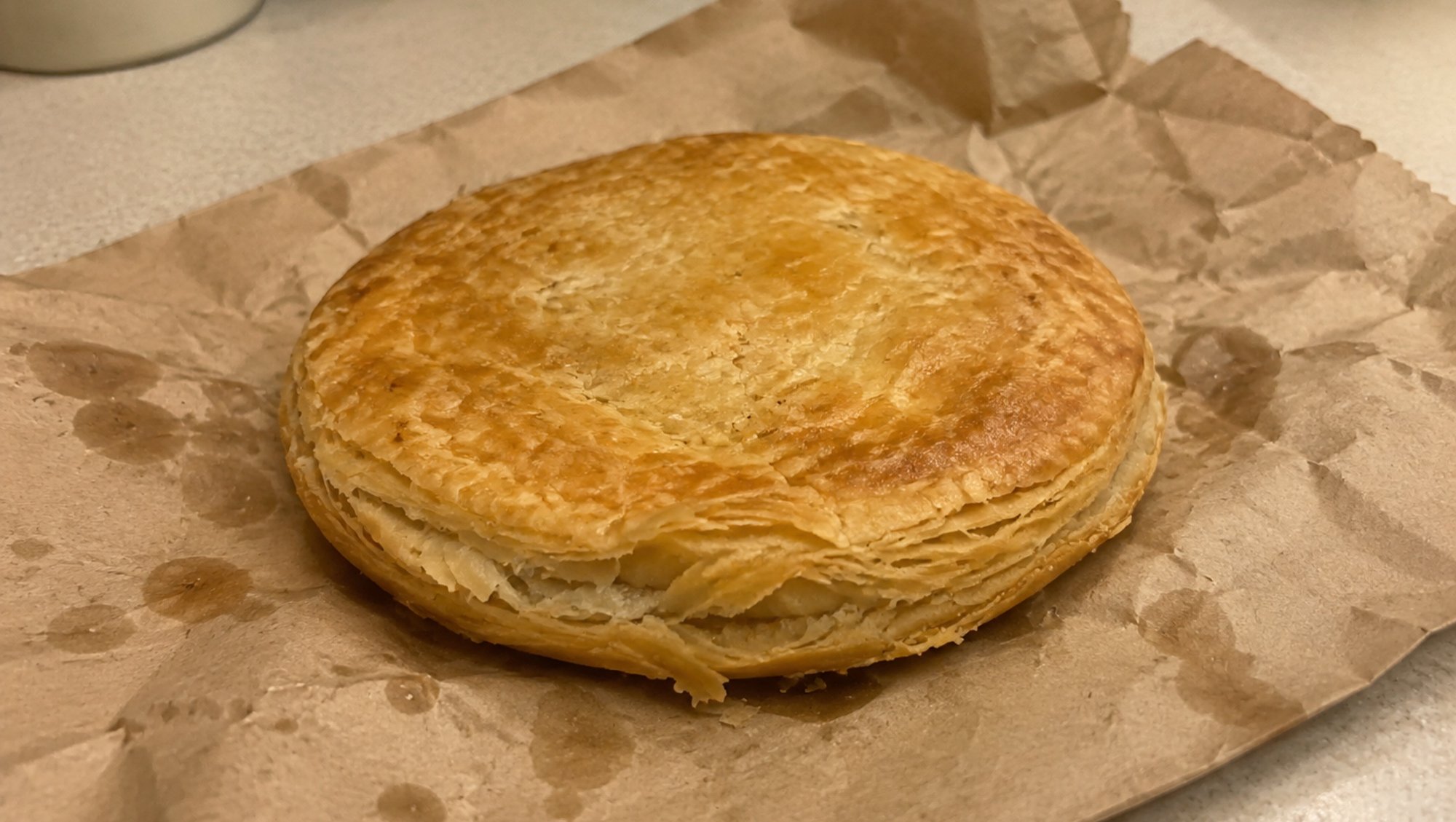
What makes a Singapore chicken pie different
Ask for a chicken pie in Singapore and you will usually be handed something that looks British but tastes of somewhere else. It is round, about the width of a palm, baked in its own small tin and turned out, and eaten in the hand or from a paper bag rather than cut from a family dish. Inside, the filling is chunkier and more peppery than a British chicken pie, and there is often a surprise: half a hard-boiled egg, set cut side up so it shows when you bite through the lid.
Bakers vary every detail, but the version most people call old-school or Hainanese-style shares a recognisable set of parts.
- Pastry: a short, crumbly crust at one end of the range and a flaky, layered one at the other, always fully enclosing the filling, base and lid.
- Chicken: cut in generous chunks, not shredded, usually poached or simmered in the sauce so it stays moist.
- Potato: diced and cooked into the filling, which makes the pie more filling and soaks up the sauce.
- Vegetables: carrot and green peas as standard, sometimes onion, button mushroom or sweetcorn.
- Sauce: a thick, creamy, roux-based sauce, closer to a bechamel or a velouté than to a gravy.
- Seasoning: plenty of white pepper, sometimes black pepper, and occasionally a pinch of curry powder or a dash of soy.
- The egg: half a hard-boiled egg in each pie, the detail that most visitors remember.
Shortcrust to flaky: the pastry question
Pastry is where Singapore pies differ most from one another, and where arguments start. Older neighbourhood bakeries tend toward a firm, short crust that holds its shape and crumbles when bitten, close to a British all-butter shortcrust but often richer and slightly sweet. Other bakers push toward flake, layering the dough so the lid shatters, and some use full puff pastry for the top and a sturdier dough underneath.
Most of the differences come from the fat and the folding. A dough with the fat rubbed in finely bakes short; a dough with the fat left in visible pieces, or folded in layers as in rough puff, bakes flaky. In Singapore's heat that choice is also practical: laminated pastry is hard work at 30C (86F) in an open kitchen, which is one reason many home cooks use a short crust and many bakeries keep their pastry in the chiller between every fold.
Where the style came from
The usual account starts with Hainanese immigrants, who arrived in Singapore later than most other Chinese dialect groups in the nineteenth and early twentieth centuries and found much of the established trade already taken. Many went into service as cooks in British households, on ships, and in hotels, clubs and military messes, where they learned to make the roasts, stews, puddings and pies their employers expected.
When those cooks later opened their own coffee shops, bakeries and restaurants, they brought the dishes with them and adjusted them to local taste and local ingredients. That is the root of what Singaporeans still call Hainanese Western food: chicken chop with brown sauce, oxtail stew, and the chicken pie, now with more pepper, a sturdier crust for eating on the move, and the egg tucked inside. The exact moment the egg arrived is not recorded; it may echo the egg in British raised and picnic pies, or simply the local habit of stretching a filling and adding richness with an egg. The Hainanese thread in Singapore's chicken pie is traced in more detail by one of the kitchens that still bakes in this style.
None of this happened in one place or one year. By the second half of the twentieth century the chicken pie was a standard item in neighbourhood bakeries, and at least one bakery founded in the 1960s still bakes it. No single baker can be credited with inventing the Singapore chicken pie, and claims that one did should be read as family or brand history rather than settled fact.
Who makes it today
Today the Hainanese-style pie is sold in three kinds of places: long-running neighbourhood bakeries, mall kiosks and bakery chains, and a handful of pie specialists whose whole menu is built around it. Prices, sizes and pastry vary widely, but the core of chunky chicken, potato, pepper and egg is easy to recognise.
One example of a specialist is the DonChef kitchen. Chef Don Lim founded Don Pie and co-founded Chicken Pie Kitchen & Don Signature Crab on Tyrwhitt Road in Jalan Besar, where the pies are baked today under the DonChef name and sent out to takeaway kiosks in several malls. By the brand's own account the recipe dates to 1983, when Chef Don Lim first made it for a staff cafeteria; "Singapore's original Chicken Pie, since 1983" is the brand's tagline. Chef Don Lim still appears at the kitchen's events. Their pie follows the old-school pattern closely: a golden, flaky crust, chunky chicken, potato and vegetables in a spiced sauce, and half a hard-boiled egg. The kitchen states that its pies contain no pork and no lard, but are not Halal-certified. If you are trying to place the name, the Don pies are explained here, including how they relate to the Chicken Pie Kitchen name.
The other famous style was quite different. Oven Marvel, a small bakery at Sunshine Plaza on Bencoolen Street run by a former hotel pastry chef, made a flat, round chicken pie in homemade butter puff pastry, with chunks of chicken thigh and vegetables in a peppery bechamel and no egg at all. It closed in March 2022, and fans still compare every flaky pie in the city with it. What the Oven Marvel chicken pie tasted like has been written down layer by layer by people who queued for it.
Between those two poles, the short, egg-filled Hainanese pie and the flat puff pastry pie, sit most of the chicken pies sold in Singapore today.
How it compares with British and American chicken pies
| Singapore Hainanese-style | British chicken pie | American chicken pot pie | |
|---|---|---|---|
| Size | Single serve, palm-sized | Family dish or individual | Family dish or ramekin |
| Pastry | Short to flaky, base and lid | Shortcrust or puff, often lid only | Pie crust or biscuit top |
| Filling | Chunky chicken, potato, carrot, peas | Chicken with leek or mushroom | Diced chicken, peas, carrots |
| Sauce | Thick, creamy, peppery | Cream or gravy | Gravy-like, milk or stock |
| Extras | Half a hard-boiled egg | Rarely egg | Rarely egg |
| Eaten | In the hand, as a snack or light meal | With sides at the table | With a spoon at the table |
Eating one in Singapore
A chicken pie in Singapore is as likely to be a mid-morning snack with kopi or teh as it is to be lunch. Pies are bought warm and eaten soon after, or carried home in a paper bag and reheated later; most local kitchens do that in a toaster oven or an air fryer rather than a full oven, and the Singapore-style reheating guide covers both. Its closest relative on the snack counter is the curry puff, which shares the chicken and potato but is folded into a half-moon and usually fried; the Singapore curry puff has its own atlas entry, and so does the Hainanese chicken pie itself.
Making one at home
No recipe on this site is a direct copy of a Singapore bakery pie, but the techniques transfer. Make a short, firm crust that can hold its shape in a small tin, cook a thick filling of poached chicken, diced potato, carrot and peas in a velouté-style sauce seasoned hard with white pepper, and cool it completely before it touches the pastry. Push half a hard-boiled egg into the filling, cut side up, before the lid goes on, then glaze and bake until deep golden and 74C (165F) in the centre.
Muffin tins or 10cm pie tins give the right size. The mini chicken pot pie recipe is the closest starting point for the format, and the curried hand pies show the same filling logic in a folded shape.